
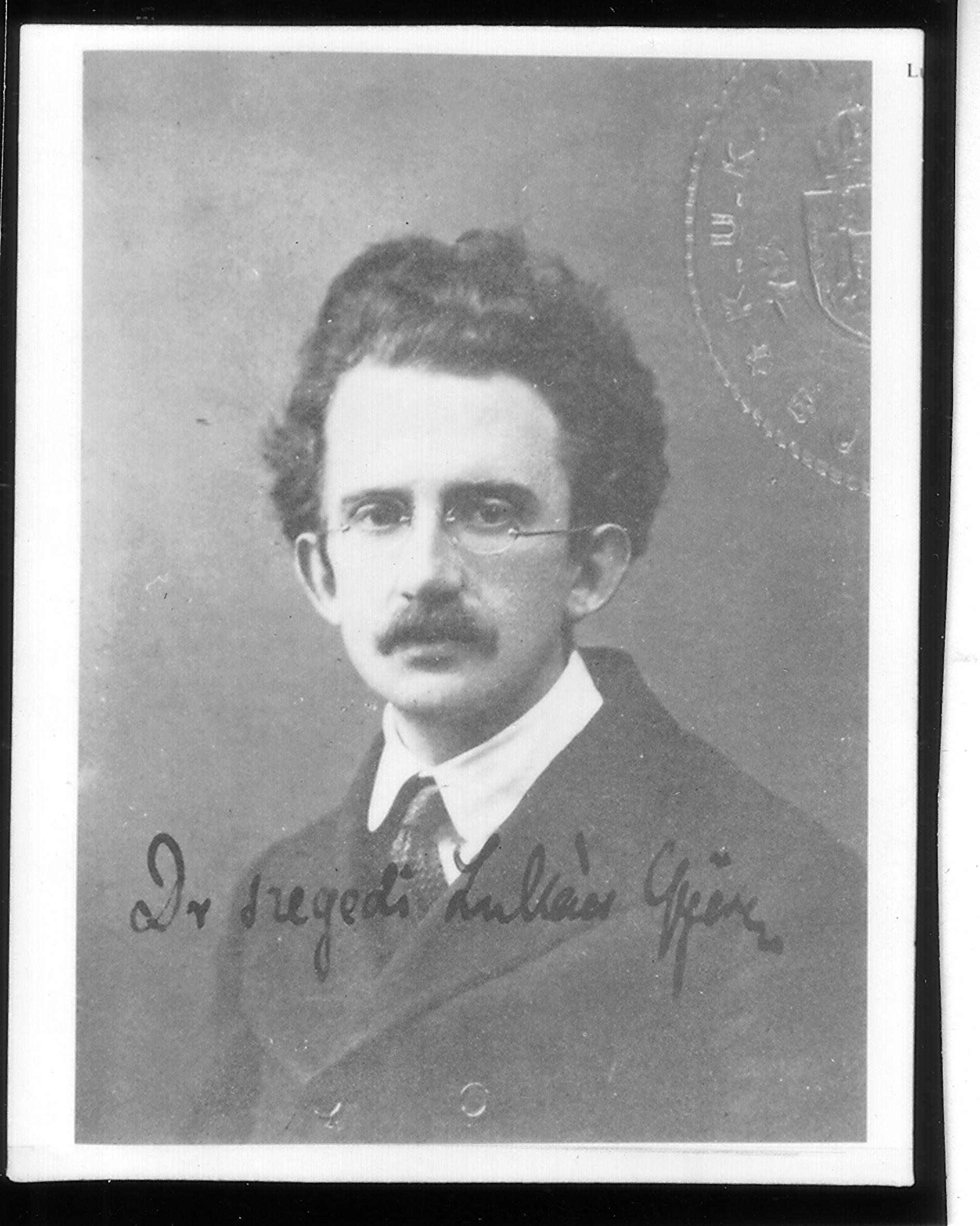
György Lukács was a Hungarian philosopher, a founding member of the school of Western Marxism, and lifetime member of the Communist Party.
Definition of teleology; The determination of a process by an end (telos) given or posited in advance, such that the process is organized towards the realization of that end, the purpose toward which it is directed.
Thus, historical teleology would posit that History is determined by an end already implicit and operative within its development, and its successive stages are intelligible as moments in the realization of that predetermined end.
Definition of ontology; The study of being, existence, and reality.
Definition of thing-in-itself; An object as it exists independently of our perception or cognition of it. In Kant, the thing-in-itself is unknowable as it is apart from experience; in Engels’s materialist account, it can become a thing for us as practice and science disclose its properties.
Definition of social being; To Marx, human essence is, in its reality, the ensemble of social relations.
Thus, an ontology of social being is Lukács’s account of human society as a distinctive, historically developed form of being. It is rooted in material life and encompasseses institutions, consciousness, language, and social relations; the basic unit and building block of this system is labor, human purposive action.
Some detractors of Marxism, i.e. Karl Popper, locate falsifiability in the doctrine of historical materialism. One such specific accusation levied at Marxism by anti-communists and ultra-leftists rests on an idealist notion of teleology understood as a realization of principle posited apriori. Codified Marxism has been critiqued as viewing history as determined by an end already implicit and operative within its development, with its successive stages intelligible as moments in the realization of that predetermined end. This mechanical caricature of historical materialism should strike fear into the heart of any Marxist who fancies themself a historian; and one should be acutely wary in avoiding exhibiting it. Lukacs’ ontology of praxis, valued by a multiplicity of tendencies, serves to illuminate and repurpose teleology as secular positing inherent to praxis. István Mészáros has described Lukacs’ philosophy as “as a defence of the universal methodological validity of the dialectical approach” against “dogmatic attacks on dialectics and glorifications of pedestrian, mechanistic materialism."
To Lenin, the subject itself was a materially and historically produced social being. Through practice, it actively produces an ideal reproduction of the object and then makes that ideal moment effective within reality. To Lukacs, this elemental form of praxis is labor, which he saw as sequential teleological positing, that activates objective causal chains; positive laws of science may represent this objectivity, and as applied to history, this takes the form of a reproductive tendency rather than a “consciously” posited end. An anticipated finality of immediate human purposiveness necessarily guides selection and activation of causal processes, and as society develops, the teleological positings behind this labor become increasingly complex (and to Althusser, individuals and emergent structures latching onto each other as historically independent elements in aleatory encounters). Some are directed immediately toward nature, making a tool, home, etc. while some are directed towards the actions of others, education, law, persuasion. This, to Lukacs, was worthy of a distinction; he saw two kinds of teleology of praxis, a) directly set natural causal processes into motion, and b) secondary positings aimed at the immediate object of another person’s action to induce other people to adopt certain ends and act accordingly. Politics, and the Party, are of the latter nature, products of mental labor and human purposiveness in social organization. Lukacs is thus able to draw a line between the purposiveness of acts composing a process, and the fundamental absence of purposiveness in the final result.
In Lukacs’ ontology of social being, he restores the priority of being over its cognition. Lenin wrote that cognitive reflection, man’s consciousness, is capable of both reflection and creation of the material world – Mao that “man’s knowledge depends mainly on his activity in material production, through which he comes gradually to understand the phenomena… and the relations between himself and nature.” Subjectivity as originating in material production and reproduction presupposes an objective reality apart from itself, engages with things-in-themselves dialectically, and then develops ideal conceptions of the transformations to be realized practically through organization.
As Engels mentions in Ludwig, even in Hegel’s system things-in-themselves cease to be as such when their essence is recognized, and become instead THINGS FOR US, things-for-themselves as understood by their determinate self-relation, in the presence of a subject. The subject comprehends the objects’ determinations through cognition, and has the capability of then changing, even creating material objectivity. It is only through this human purposiveness of action that history is to be made. This can only be the result of a long, tumultuous process, made up of the revolutionary action of individuals, achieving quantitative goals, by making great qualitative leaps. Only through revolutionary praxis and knowledge of positive laws of history can the working class achieve Communism and liberate humanity from its own chains; this is not a result prescribed to us in advance. We must organize, and make it for ourselves; for to Marx the very essence of humanity isn’t any such foregone purpose or conclusion, but the essence of their social being; and for revolutionaries, their purposive militant materialism, and their protracted peoples’ wars.
“…then there is an end to the Kantian ungraspable ‘thing-in-itself’. The chemical substances produced in the bodies of plants and animals remained just such ‘things-in-themselves’ until organic chemistry began to produce them one after another, whereupon the ‘thing-in-itself’ became a thing for us — as, for instance, alizarin, the coloring matter of the madder, which we no longer trouble to grow in the madder roots in the field, but produce much more cheaply and simply from coal tar.” (Ludwig Feuerbach and the End of Classical German Philosophy)
“For us” is a relation of cognition. “For-itself” names the object’s determinate self-relation. Cognition can grasp that self-relation, and it is the intention of philosophy to bring its positive Content to light, and develop thought into reflexive conceptual knowledge.